IOBRportal Book
2026-10-16
1 IOBRportal framework
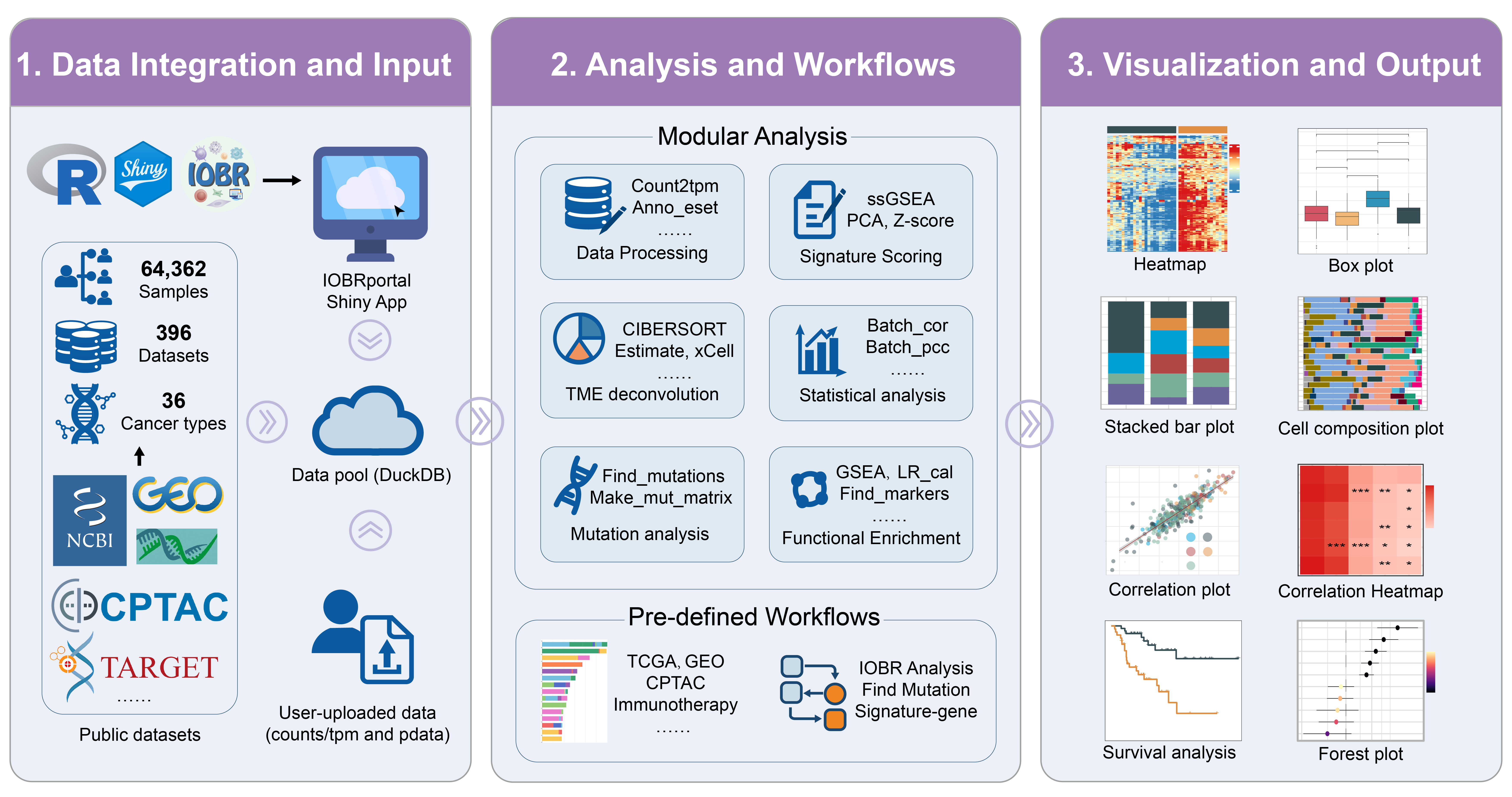
Figure 1.1: Overview of the IOBRportal platform.
1.1 📚 Introduction
IOBRportal is a Shiny-based, cloud-deployable platform built within the IOBR ecosystem for bulk transcriptome and immuno-oncology research. It integrates curated public cohorts with user-uploaded datasets and provides two complementary analysis modes:
- 🧩 Functions — flexible, module-level analyses
- 🔄 Workflows — guided pipelines with automatic reuse of upstream results
Within a unified interface, IOBRportal connects data preparation, signature scoring, tumor microenvironment (TME) deconvolution, clustering, mutation analysis, statistical testing, visualization, and result export.
The current version incorporates 64,362 samples, 396 datasets, and 36 cancer types. Curated resources are organized into four entry categories:
| Entry | Resource type |
|---|---|
| 🧬 TCGA | TCGA transcriptomic, clinical, TME, signature, and mutation resources |
| 💉 IMMC | Curated immunotherapy cohorts |
| 🎗️ MOLC | Curated cancer cohorts, primarily derived from GEO |
| 🧫 CLIC | CPTAC and TARGET cohorts |
1.2 🔄 Analysis workflow
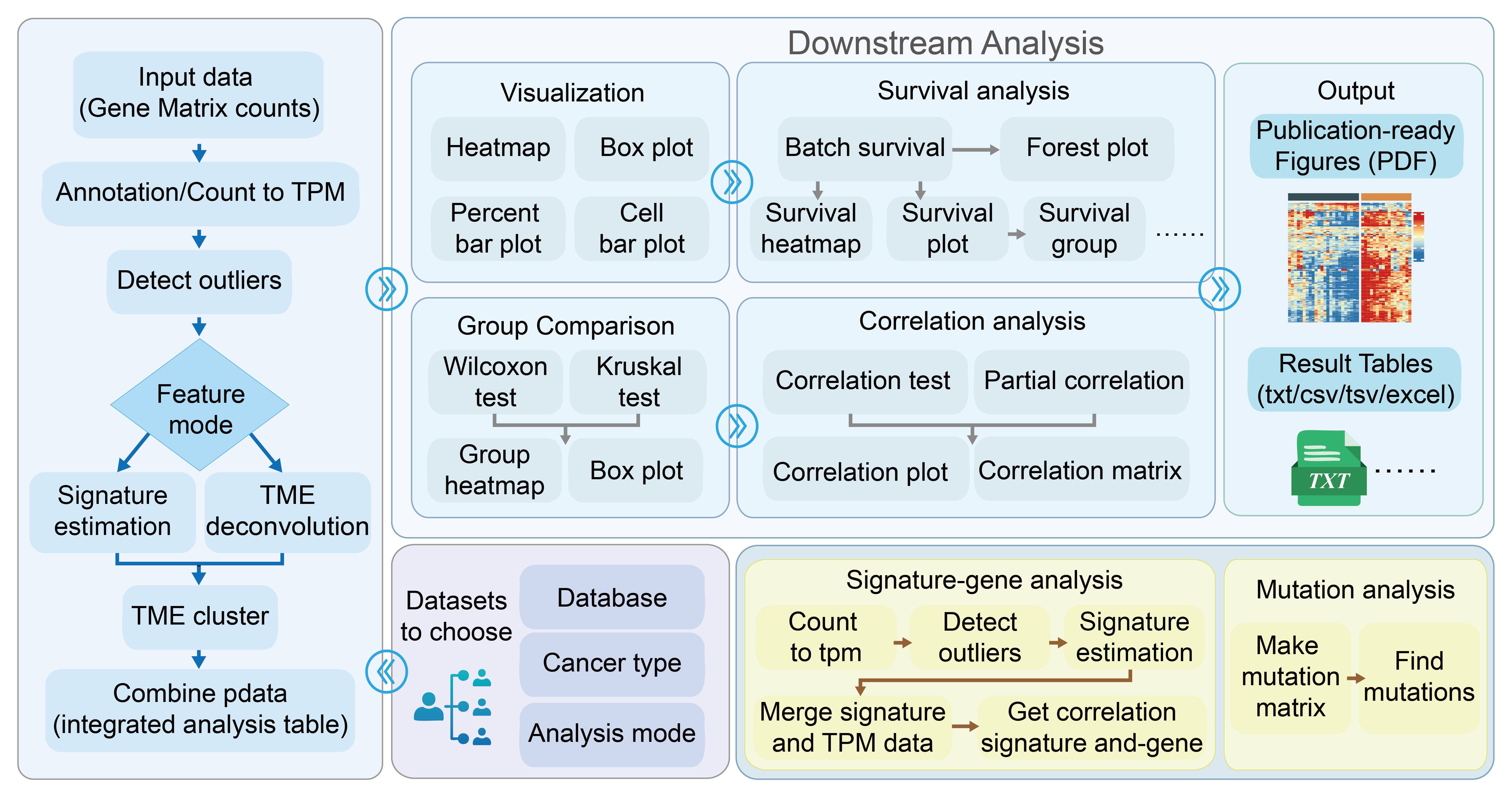
Figure 1.2: Integrated analysis workflow of IOBRportal.
The platform provides three principal user-uploaded data workflows:
- 🧬 Integrated Workflow — expression preprocessing, signature scoring or TME deconvolution, clustering, phenotype integration, and downstream analysis
- 🧫 Mutation Workflow — mutation-matrix construction, mutation association analysis, visualization, and survival analysis
- 🔗 Signature-Gene Workflow — expression preprocessing, signature estimation, and signature-gene correlation analysis
1.3 🚀 Access IOBRportal
| Mode | Access |
|---|---|
| 🌐 Primary server | https://iobr.github.io/IOBRportal/ |
| 🌐 Backup server | https://lisom.work/shinyapps/IOBRportal/ |
| 📦 R package | https://github.com/IOBR/IOBRportal |
| 📖 Documentation | https://iobr.github.io/IOBRportal_book/ |
To install and run IOBRportal locally:
if (!requireNamespace("remotes", quietly = TRUE)) {
  install.packages("remotes")
}

remotes::install_github("IOBR/IOBRportal", dependencies = TRUE)

library(IOBRportal)
run_iobrportal()
The local R package supports upload-based workflows. Database-backed cohort resources are available through the fully configured online deployment.
1.4 📖 About this book
This book provides:
- installation and deployment instructions
- module and parameter descriptions
- user-uploaded data requirements
- workflow-based tutorials
- representative analysis examples
- result interpretation and export guidance
1.5 💿 License
IOBRportal is released under the GNU General Public License v3.0. See LICENSE for details.
The online version of this book is licensed under the Creative Commons Attribution-NonCommercial-ShareAlike 4.0 International License.
1.6 🏆 Citations
If you use IOBR ecosystem in your research, please cite the relevant computational methods, and the following IOBR ecosystem papers:
Zeng D, Fang Y, et al. Enhancing immuno-oncology investigations through multidimensional decoding of tumor microenvironment with IOBR 2.0. Cell Reports Methods. 2024;4:100910. doi:10.1016/j.crmeth.2024.100910
Fang Y, Kong Y, Rong G, Luo Q, Liao W, Zeng D. Systematic investigation of tumor microenvironment and antitumor immunity with IOBR. Med Research. 2025;1(1):136–140. doi:10.1002/mdr2.70001
Luo Q, Qian H, Liu Y, … , Wang S, Zeng D. IOBRportal: a cloud-based integrated platform for multidimensional decoding of tumor microenvironment and genomic landscapes. Cancer Immunol Immunother. 2026. doi:10.1007/s00262-026-04540-7
1.7 ✉️ Reporting bugs
Report bugs or request features through GitHub Issues.
E-mail questions to:
- Qingcong Luo: qingcongl@163.com
- Dr. Dongqiang Zeng: interlaken@smu.edu.cn